
FishburneTabs®OH - a clinical support tool
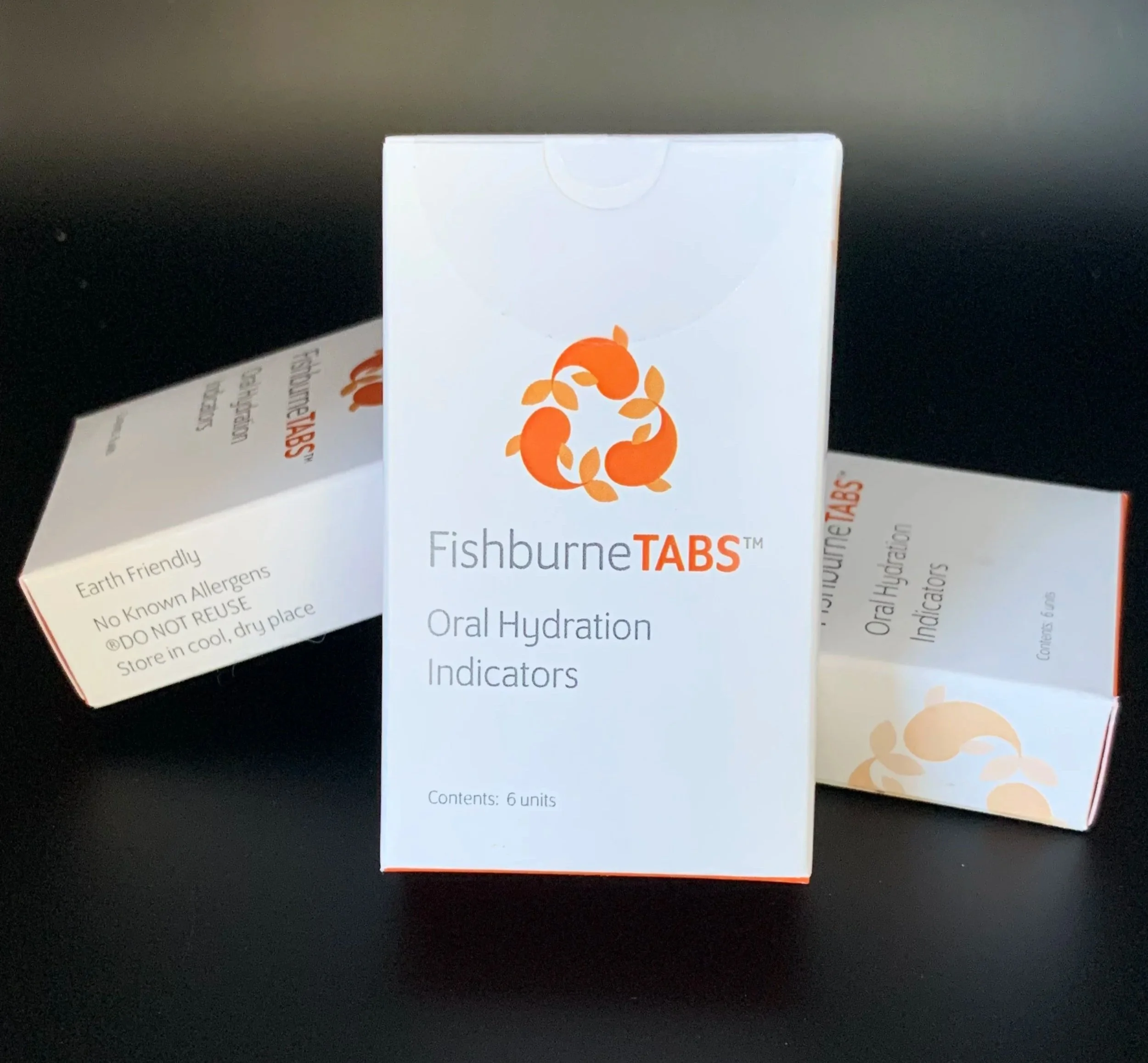
The FishburneTabs™ were envisioned by Dr. Coty Fishburne, South Carolina dentist and inventor, in response to the impact of oral desiccation which he had seen in his practice and in his own family, as his mother suffered profoundly from xerostomia. Through a chance meeting at a dental conference with Rita May, a past director of the Sjögren’s Syndrome Foundation, the Fishburne May, LLC was formed to develop what are now the FishburneTabs®OH. Protected by patent, copyright and trademarks, the FishburneTabs®OH were recognized to also hold potential as a game-changing collection device.
Ordering FishburneTabs®OH
FishburneTabs®OH Cardinal Identification Number (“CIN”) 6114524
https://www.cardinalhealth.com/en/services/retail-pharmacy/ordering-and-inventory/vantus-hq.html
Note: If ordering for the first time, clinics must have a Cardinal Specialty account number to access Cardinal Health Vantus system.
FishburneTabs®OH Oral Hydration
Saliva flow is governed by the salivary glands which are under autonomic control by both sympathetic and parasympathetic systems. Stimulation of either parasympathetic or sympathetic nervous systems will stimulate salivary gland secretion, making saliva flow a dynamic process prone to change. Saliva flow is known to change naturally during the day.
Change toward a drying oral cavity may also be caused by polypharmia (especially with anticholinergic medications), recreational and medical drugs, specific diseases such as diabetes, Sjögrens, and stressful conditions. However, an oral drying trend may not be perceived by an individual, since many accommodate the condition unknowingly.
FishburneTabs ®OH are a clinical support tool to arrive at determination of a drying oral cavity in light of a patient’s medical history.
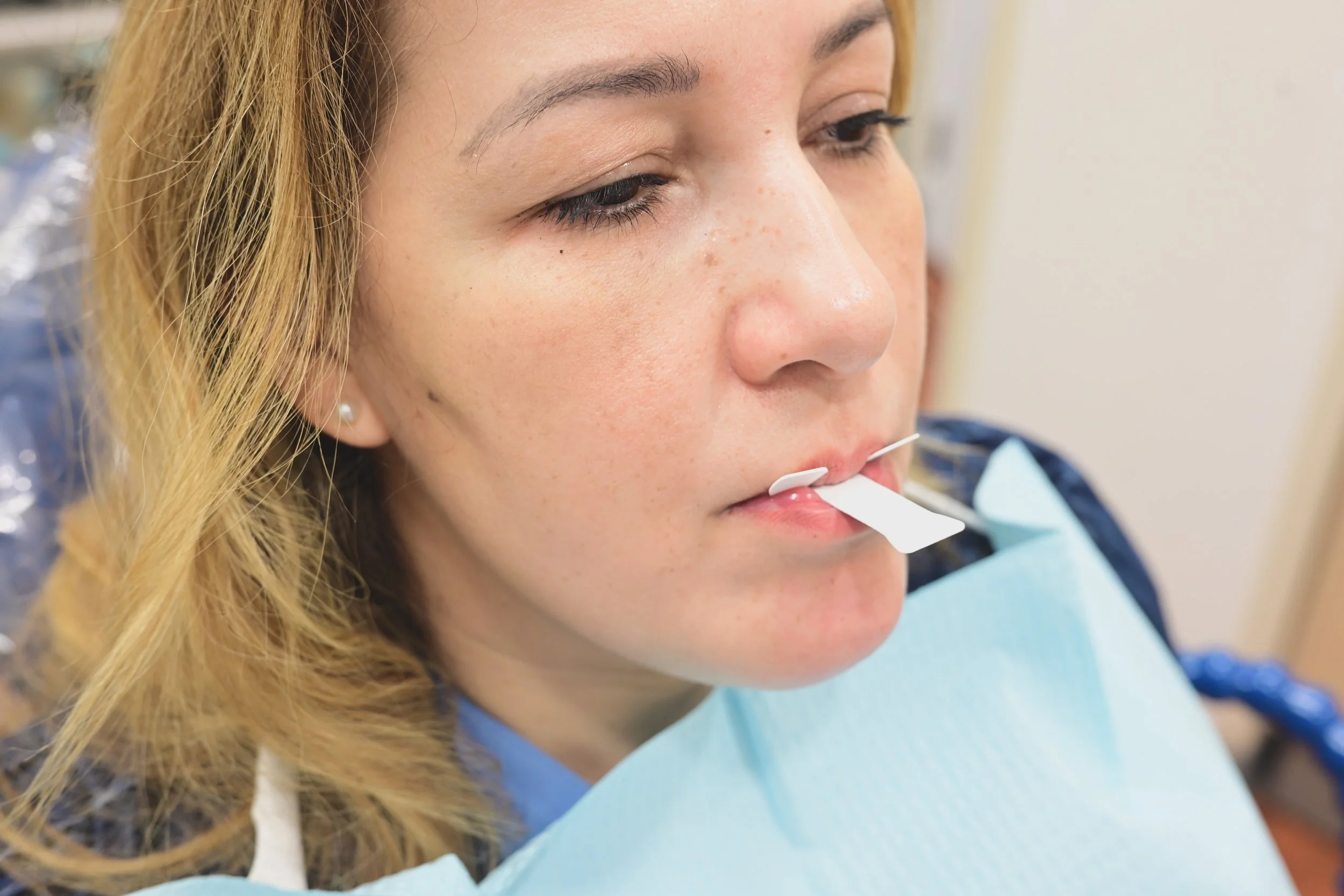
FishburneTabs®OH indicate total saliva (secretions from all salivary glands) available in the oral cavity at a given point in real time. They are intended to easily show flow change and individual trends in saliva volume.
Who Can Use the FishburneTabs®OH
For Professional Use: FishburneTabs™ platform devices are patented, made in certified USA ISO facilities utilizing unique papers with materials sourced in the USA.
Physicians of all specialties as well as dentists may use the FishburneTabs®OH to evaluate and monitor patients. In cases where systemic disease is suspected or pre-existing, reimbursement opportunities are available for the time the healthcare provider may take evaluating the oral cavity while using the FishburneTabs.
Suggested directions for use can be seen on this brief video.
FAQs
FishburneTabs®OH - reading
-
Saliva produced by all salivary glands (sublingual, submandibular, parotid, and numerous minor glands scattered in the oral cavity) is collectively termed whole saliva. Moisture available in the oral cavity is termed oral hydration. Total saliva production is indicated by FishburneTabs®OH. Regular use of the FishburneTabs®OH provides documentable evaluation of hydration change in the oral cavity to facilitate diagnosis and the monitoring of oral and systemic disease.
-
The Fishburne Scale of arbitrary numbers is intended as a device to show oral hydration change in time increments determined by the clinician. A reading at 3 and above can be considered a well hydrated oral cavity while reading below 1.5 can be considered a dry or drying oral cavity. However, temporary factors such as stress or cannabinoid use should be considered. Evaluation with the device is easily repeatable.
-
Saliva water content is reflected on the Fishburne scale when it is removed from the mouth. After 3 minutes, water in saliva plus the impact of mucins and proteins influence the capillary action of the absorbent paper and a generalized total available saliva reading can be taken. FishburneTabs®OH readings are always intended to be viewed in the context of the patient history.
-
People must lose 50% of their saliva production before they become aware of oral dryness (xerostomia). Therefore, a drying oral cavity often goes unnoticed. Meanwhile, oral health declines and systemic diseases may go undiagnosed.
Saliva production is impacted by numerous factors including such as: age, use of one or more medications that cause dry mouth, cannabinoid use, radiation and cancer therapies, sleep disturbances and temporary or continued stress. Sustained oral dryness may severely impact oral health and quality of life, and is also a symptom of autoimmune disease(s) and diabetes. Therefore, it is incumbent on the clinician to determine the cause(s) of oral cavity desiccation and advise a patient accordingly.
-
This quantity was favored for patient self-testing. Since saliva production changes throughout the day or under stress (as often experienced in a medical office), a clinician may request that a patient self-test twice or three times per day and then send the clinician photos of their results.
-
Paper-based and incinerable, FishburneTabs®OH add no disposal cost to the clinic or the environment.
-
Reimbursement through Medicare or Medical Insurers is possible for evaluation of xerostomia/dry mouth, oral cavity examinations, and determination of a drying oral cavity due to disease by certified professionals. While seamless submissions to insurance agencies are not guaranteed, the following three-step process is provided as a method that has been successfully employed to submit claims.
Tips for Reimbursement
1. Primary Diagnosis: Professionals may be reimbursed for their time assessing Oral Hydration (dry mouth) employing the FishburneTabs®OH via Medicare or Medical Insurers for patients diagnosed with diseases or conditions such as:
Diabetes
Cardiovascular disease
Immune disorders and Transplant
Cancer (in treatment)
Autoimmune Disease (Lupus, Sjögrens, RA, Scleroderma etc.)
2. Embed one of the following appropriate ICD 10/11 codes under the Primary Diagnosis:
K11.0 – Atrophy of salivary gland
K11.1 – Hypertrophy of salivary gland
K11.7 – Disturbances of salivary secretion
K11.8 – Other diseases of salivary glands
K11.9 – Disease of salivary gland, unspecified
R58.2 – Dry mouth, unspecified
M3501 – Sjögrens Syndrome with dry eye
M350C – Sjögrens Syndrome with dental involvement
M3500 – Sjögrens Syndrome, unspecified
3) Use Evaluation and Management codes to process for clinician time, first determine:
New Patient Evaluation and Management Codes
Code
Description
Office or other outpatient visit for the evaluation and management of a new patient, which requires a medically a ppropriate history and/or examination and straightforward medical decision making. When using time for code selection, 15-29 minutes of total time is spent on the dale of the encounter.
99202
Office or other outpalient visit for the evaluation and management of a new patient, which requires a medically appropriate history and/or examination and low level of medical decision making. When using time for code selection, 30-44 minutes of total lime is spent on lthe date of the encounter.
99203
Office or other outpatient visit for the evaluation and management of a new patient, which requires a medically appropriate history and/or examination and moderate level of medical decision making. When using time for code selection, 45-59 minutes of total time is spent on the dale of the encounter.
99204
Office or other outpalienl visit for lhe evaluation and managemenl of a new patient, which requires a medically appropriate history and/or examination and high level of medical decision making. When using time for code selection, 60-74 minutes of IotaI time is spent on the date of the encounter.
99205
Existing Patient Evaluation and Management Codes
Code
Description
Office or other outpatient visit for the evaluation and management of an established patient that may not require the presence of a physician or other qualified health care professional
99211
Office or other outpatient visit for the evaluation and management of an established patient, which requires a medically appropriate history and/or examination and straighforward medical decision making. When using time for code selection, 10-19 minutes of IotaI time is spent on the date of the encounter.
99212
Office or other outpatient visit for the evaluation and management of an established patient, which requires a medically appropriate history and/or examination and low level of medical decision making. When using time for code selection, 20-29 minutes of total time is spent on the dale of lhe encounter.
99213
Office or other outpatient visit for the evaluation and management of an established patient, which requires a medically appropriate history and/or examination and moderate level of medical decision making. When using time for code selection, 30-39 minutes of total time is spent on the dale of the encounter.
99214
Office or other outpatient visit for the evaluation and management of an established patient, which requires a medically appropriate history and/or examination and high level of medical decision making. When using time for code selection, 40-54 minutes of total time is spent on the dale of the encounter.